
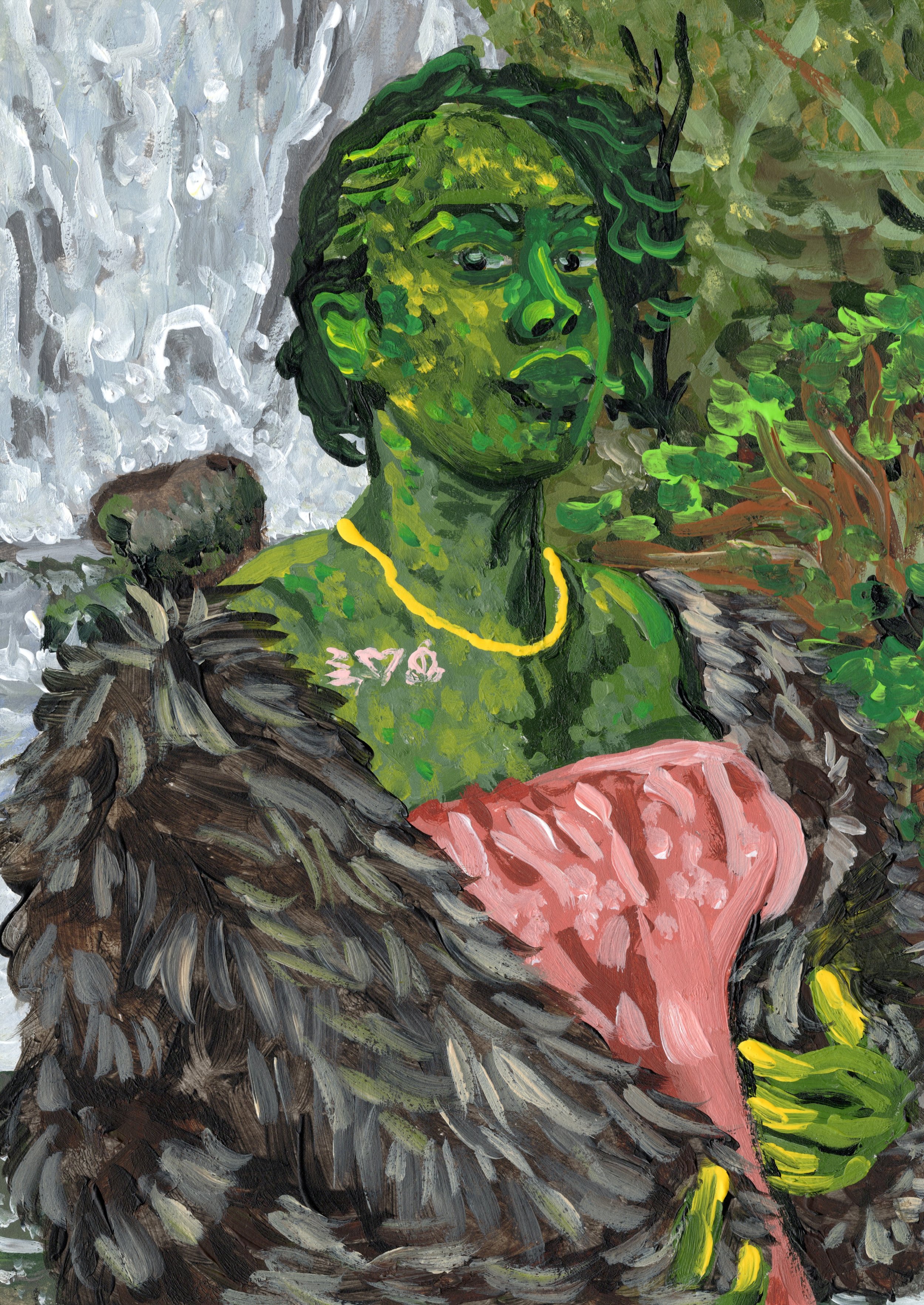
This year, I am returning to a project that has lived with me for a long time. One that has changed shape as my life has changed.
Black in the Landscape began in 2020 as a desire to paint Black women and to hold conversations with them about nature, place, and belonging in the context of Oregon’s racist history and the general stereotypes surrounding Blackness in nature. I was interested in where Black women chose to be seen outdoors, what those places meant to them, and how their bodies existed in landscapes that have often been framed as neutral, white, or inaccessible.
Within a short amount of time the scale of the project grew larger than I could sustainably hold. Life shifted. Within that span of time, I became a mother to two amazing little humans. I experienced the death of my grandmother and great-grandmother. Relationships that were central to me fractured. I started and graduated with my BFA in painting, bringing to a close a 10-year bachelor degree journey. I lost the archive of Black Muses interviews and some photos that once felt very central to the work, and with that loss came grief and pause, but has slowly reawakened with clarity.
In 2026, Black in the Landscape exists as a living archive, one built slowly through small paintings, field notes, site mapping, and selective written transcripts. The focus is no longer on collecting everything, but on paying close attention. On showing that Black bodies are already in the landscape resting, walking, observing, choosing, belonging.
The portraits I am making are intentionally small. They live on paper. They are painted primarily in greens, allowing the figures to merge with their environments rather than stand apart from them. These works sit alongside my own experiences outdoors: plein air sketches, notes from time spent near waterways, and observations gathered during residencies and collective projects throughout Oregon.
This year, my goal is consistency, not completion.
2026 Goals
Complete 12 small portrait works (approximately one per month)
Continue developing Black in the Landscape as a living archive, not a finished series
Create a visual map of the sites referenced in the work (Cathedral Park, Multnomah Falls, and other chosen locations)
Invite a small number of new Black muses into the project, with interviews preserved as written transcripts
Expand the archive with field notes, photographs, and studies of natural materials encountered along the way
Maintain a light, sustainable presence for the work online via my website and social platforms. Allowing it to be visited, returned to, and grown over time
Black in the Landscape is not about proving that Black people belong in nature. It is about documenting what is already true.
This is where I’m working from in the beginning of and throughout the year, 2026.
This entry sits alongside Black in the Landscape, an ongoing archive of painted field notes and site-based work.